Knowing how to write a brand story that resonates with Sri Lankan consumers is one of the most valuable skills a local business owner can develop, because the same narrative techniques that work for a London startup or a Mumbai corporation will often fall flat here. Sri Lankan consumers make purchasing decisions through a lens of trust, family values, community reputation, and lived economic experience. Your story has to speak to that reality, not around it.
What Is a Brand Story and Why Does It Matter for Sri Lankan Businesses
A brand story is not your “About Us” page. It is the coherent, emotionally true narrative that explains why your business exists, who it serves, and what it stands for. Think of it as the answer to the question every potential customer quietly asks before handing over their money: “Can I trust these people?”
In Sri Lanka, that question carries extra weight. After the economic crisis, consumers became significantly more cautious. Disposable income tightened, and spending decisions got more deliberate. A business that communicates clearly why it exists and who is behind it earns consideration that competitors without a clear story simply cannot. Understanding the difference between branding and marketing for Sri Lankan SMEs makes it easier to see where storytelling fits: branding builds the foundation of trust; marketing activates it.
Understanding What Sri Lankan Consumers Actually Connect With
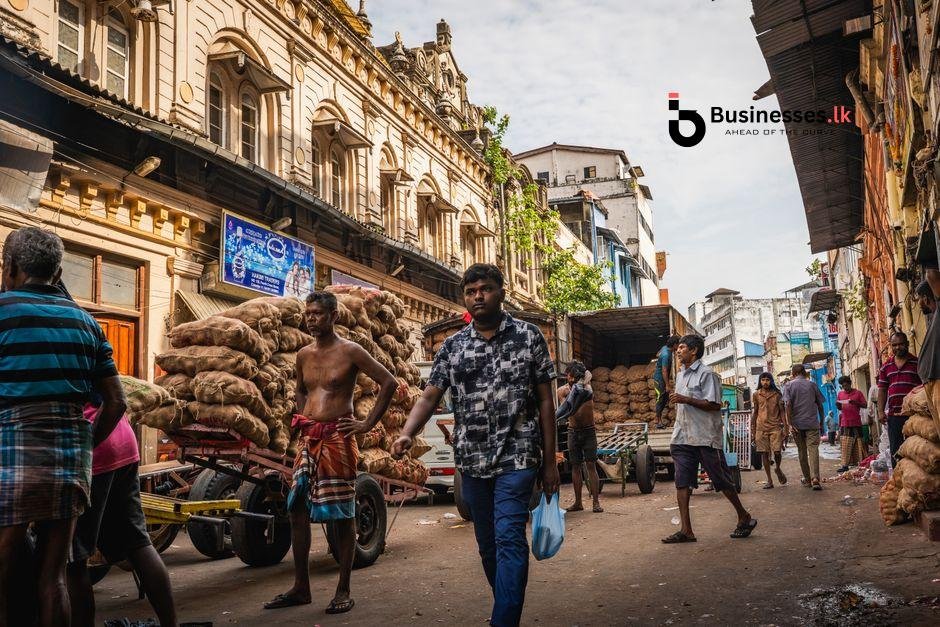
Sri Lankan purchasing behaviour is deeply relational. People buy from people they know, or people vouched for by someone they know. Word of mouth still drives a substantial share of business across Pettah traders, Kandy boutiques, and Colombo service providers alike. Your brand story needs to position you as a known, trusted figure, not a faceless entity.
A few specific values consistently show up in what resonates locally:
- Family and intergenerational roots. Sri Lankans respond warmly to businesses with a family origin story, even a very recent one. “Started in my mother’s kitchen in Nugegoda” lands differently than “founded.”
- Struggle and resilience. Post-crisis, consumers relate to founders who acknowledge difficulty and kept going. This is not pessimism; it is authenticity.
- Community benefit. Does your business help the neighbourhood, employ locally, or source from Sri Lankan farmers or artisans? That matters to a growing segment of buyers.
- Practical value, honestly stated. Overblown claims trigger scepticism fast. Specific, grounded promises work better.
The Core Elements of a Compelling Sri Lankan Brand Story
Every effective brand story, regardless of industry, contains the same basic architecture. The context you fill it with is what makes it local.
The founder’s motivation. Why did you start this? Not the business-plan version, the real version. Were you tired of watching your village’s handloom weavers lose income to cheap imports? Did you open your bakery because your grandmother’s recipes deserved a wider audience? Specificity here is everything.
The problem you solve. Frame it in terms your customer recognises from their own life. A Colombo 10 resident understands traffic, limited time, and rising costs. A farmer in Kurunegala understands unpredictable markets and input costs. Speak to the actual problem, not a sanitised version of it.
Your values in action. Do not list values like bullet points on a wall. Show them through decisions. “We refused to cut corners on our ingredients when flour prices doubled” is a value statement. “We believe in quality” is not.
The proof. A real customer outcome, a community impact, a milestone achieved. Even one concrete detail gives your story credibility.
Step-by-Step: How to Write Your Brand Story
Start by answering these four questions in writing, as honestly as you can. Do not edit yourself at this stage.
- What problem were you trying to solve when you started, and for whom?
- What did you give up or risk to make it happen?
- Who has your business genuinely helped, and how?
- What would be lost in your community if your business did not exist?
Once you have raw answers, look for the emotional thread connecting them. That thread is your story. Now shape it into three short paragraphs: the before (the problem and your motivation), the turning point (what you did and why), and the now (what your business delivers and who it serves).
Keep it under 200 words for your primary version. Sri Lankan audiences, especially on mobile, are reading quickly. Longer versions can live on your website; a crisp, 150-word story can go everywhere. For practical guidance on achieving the maximum potential of your Sri Lankan business, your brand story is one of the first foundational pieces to get right.
Adapting Your Brand Story Across Sinhala, Tamil, and English Audiences
Sri Lanka’s linguistic reality means your brand story will need to work across at least two languages, and probably three. This is not just translation; it is cultural adaptation.
English works well for Colombo-based professional audiences, export clients, and younger urban consumers. Sinhala connects deeply with a broad national base, particularly outside the Western Province. Tamil is essential if you serve the North, East, or the significant Tamil-speaking population in Colombo itself. Dismissing any of these is leaving trust on the table.
When adapting rather than translating, pay attention to tone. Sinhala brand language often carries warmth and familial address. Tamil storytelling frequently emphasises heritage and dignity. English-language versions can afford slightly more directness. The core facts stay the same; the emotional register shifts appropriately for each audience.
Work with a native speaker who understands marketing context for each language. A direct machine translation of your English story into Sinhala often loses the resonance entirely, and can occasionally introduce unintended connotations.
Common Mistakes Sri Lankan Businesses Make With Brand Storytelling
The most common error is copying the tone of a multinational. Phrases like “empowering communities through innovation” sound borrowed because they are. Real Sri Lankan audiences, particularly outside Colombo, respond to concrete, human language, not corporate abstractions.
Another frequent mistake is making the brand story entirely about the founder’s achievements rather than the customer’s experience. Your story matters, but only as far as it helps the customer understand what they gain. Keep bringing it back to them.
Ignoring the post-crisis context is also a miss. Sri Lankan consumers are sharper about value than they were five years ago. A brand story that reads as aspirational to the point of being disconnected from economic reality can feel tone-deaf. Acknowledging that you understand your customers’ constraints, and that your business was built with those constraints in mind, builds immediate credibility.
Understanding modern Sri Lankan business culture helps here. Trust is built through consistency, humility, and proximity, not through polished campaigns that feel distant.
Real-World Examples: Brand Story Approaches That Work Locally
Consider a small organic vegetable supplier operating out of Matale who built his entire story around a single turning point: the day he watched a neighbouring farmer take a loss on a full harvest because they had no direct market access. That one moment, told plainly on his Facebook page, generated more shares and enquiries than any product promotion he had run. The story was specific, local, and emotionally true.
Or think about the many Sri Lankan apparel brands that have grown loyal followings by documenting their artisans by name and village. Not as a marketing gimmick, but as genuine acknowledgment that the product’s value is inseparable from the people who made it. Consumers who bought for price initially became repeat customers because of the story.
These examples share a structure: a real person, a real problem, a real resolution. No invented personas, no borrowed language. That is the template to follow when you work on how to write a brand story that resonates with Sri Lankan consumers in your own sector.
How to Use Your Brand Story Across Your Marketing Channels
Once you have your core story, use it as source material rather than a single piece of content. Your About page carries the full version. Your Instagram bio holds one sentence from it. Your proposal documents open with two paragraphs of it. Your team wears it in how they answer the phone.
WhatsApp remains one of the highest-engagement channels for Sri Lankan SMEs. A well-crafted brand story introduction sent through a WhatsApp Business account, particularly to an existing contact list, consistently outperforms cold social media posts. Learn how sharing your brand story via WhatsApp Business can extend your reach to warm audiences who already have a reason to trust you.
On social media, break your story into micro-content. One post about why you started. A second about a customer you helped. A third showing the people behind the product. Spread across a month, this gives your audience a complete picture without overwhelming any single post.
Your brand story is not a one-time exercise. Revisit it annually, especially as your business grows. The story that describes a one-person operation out of a garage will need updating once you have a team and a track record. A good brand story grows with the business, because a good brand story is simply an honest one.
FAQ
What should a brand story include for a Sri Lankan audience specifically?
For a Sri Lankan audience, your brand story should include a clear founder motivation grounded in local context, an honest acknowledgment of the problem your customers face, evidence of community or family values in action, and at least one concrete outcome or customer result. Cultural specificity, whether that is a regional reference, a local ingredient, or a named community, consistently outperforms generic language.
Can a small or new business have a brand story if it has no history yet?
Yes. Your brand story does not require years of trading history. The most compelling element of any new business story is the “why now” moment: what did you see, experience, or decide that made starting this business the right thing to do? A new bakery with three months of trading can tell a powerful story about the gap in the market it was born to fill, and the values it will not compromise on to fill it.
Should I write my brand story in Sinhala, Tamil, or English, or all three?
Ideally, you should have versions in all three, adapted rather than just translated, if your business serves a broad Sri Lankan audience. Start with whichever language your primary customer base uses most naturally. If you operate primarily in the North or East, Tamil comes first. For most Colombo-based businesses serving a mixed urban market, English and Sinhala versions are the minimum. Investing in a proper Tamil adaptation signals respect to Tamil-speaking customers and opens a genuinely underserved market for many SMEs.